
Construction Has Always Required Problem Solving
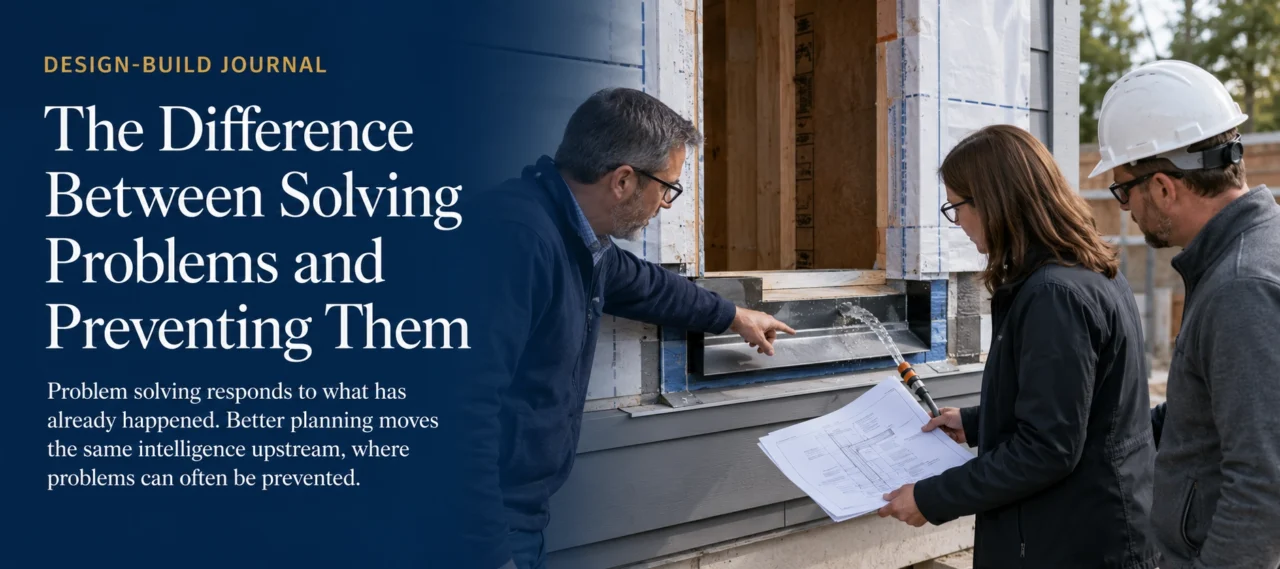
Construction professionals are often measured by their ability to solve problems. A concealed condition may be discovered after demolition, a material may arrive with unexpected characteristics, existing walls may not be square, or a utility may run through a proposed opening. Two building systems may also compete for the same space, requiring the team to assess the condition, develop alternatives, and keep the project moving.
This ability matters because existing buildings retain uncertainty, and no amount of planning can eliminate every challenge. Yet there is an important difference between solving an unavoidable problem well and repeatedly solving problems that could have been prevented.
The strongest project teams do both. They respond effectively when genuine surprises arise, but they also move as much problem-solving effort as possible into planning—while the project still has the freedom to benefit from it.
Some Problems Begin as Unanswered Questions
Many construction problems do not first appear in the field. They begin earlier as questions that were never fully resolved. Will the selected appliance fit the cabinetry and utility plan? Does the electrical service have enough capacity? How will a new flooring material transition into the existing home? Where will ductwork pass through the proposed structure? Has the owner approved the material early enough to accommodate its lead time?
When these questions remain unanswered, construction often proceeds through assumptions. Those assumptions may hold, but when they do not, the issue appears in the field as though it were a new problem. In reality, the project may simply have reached the point where an earlier uncertainty could no longer remain hidden.
Prevention Begins with Investigation
Preventing problems does not mean predicting the future perfectly. It means looking carefully enough to recognize what the project can reasonably understand before construction begins. Existing conditions can be observed, measured, documented, and sometimes selectively exposed. Available drawings and records can be reviewed, while structural, mechanical, electrical, and plumbing requirements can be studied. Product information, installation requirements, and lead times can also be confirmed.
Investigation may reveal limitations, but discovering them early is valuable. A structural condition identified during planning can influence the design before permitting, pricing, and construction. A long material lead time can shape procurement before it delays installation, and an existing utility conflict can be addressed while alternatives remain open.
The condition may still require a solution. Planning changes when and how that solution is developed, allowing the project to respond while choices remain flexible.
Preconstruction Moves Work Upstream
This is one of the central purposes of Preconstruction: Where Successful Projects Begin. During preconstruction, the team develops the design while simultaneously considering existing conditions, engineering, constructability, cost, selections, permitting, procurement, and sequencing. Questions that might otherwise emerge during construction are invited into the conversation earlier.
A designer can revise a layout before drawings are finalized. An engineer can influence the structural approach while the architecture remains flexible, and a builder can identify installation or sequencing concerns before they become field conflicts. Trade professionals can also contribute specialized knowledge before the project depends upon an unsupported assumption.
This work does not make the project slower. It relocates effort to the stage where resolving a problem is usually less disruptive and more economical.
A Problem on Paper Is Different from a Problem in the Field
During planning, a conflict can often be solved through conversation, drawing revisions, product research, or comparison of alternatives. During construction, the same conflict may affect completed work, scheduled trade partners, ordered materials, inspections, and the owner’s expectations. The range of available solutions may be smaller, and each option may carry greater consequences.
Moving a doorway on a plan may take only a few minutes. Moving it after framing, wiring, drywall, trim, and flooring have been completed is a very different undertaking. Selecting an appliance before cabinetry is ordered preserves options, while changing it after fabrication may affect several systems and require expensive revisions.
The technical problem may be identical, but its timing changes its effect on the project. Early discovery preserves options that physical construction gradually removes.
Prevention Requires Coordination
A question can be answered correctly by one discipline and still create problems elsewhere. A structural solution may work technically while interfering with ductwork or ceiling design. A material may meet aesthetic expectations but require an installation method inconsistent with the existing substrate. A lighting plan may look appropriate on an electrical drawing while conflicting with framing or mechanical systems.
Prevention therefore requires more than isolated expertise. It requires coordination among the people whose work will be affected. Design-Build creates an environment in which designers, builders, engineers, estimators, and trade professionals can examine decisions together. Their different perspectives expose relationships that may remain invisible when each discipline works separately.
The goal is not simply to find an answer. It is to find an answer that works within the entire project and supports the owner’s larger priorities.
Risk Cannot Be Eliminated
It would be misleading to suggest that thoughtful planning can prevent every construction problem. Existing buildings contain concealed conditions, products can be discontinued or delayed, and weather, inspections, market conditions, and human error can affect the work. New information may also require the project to adapt.
Risk management is not the promise of a problem-free project. It is the disciplined effort to understand uncertainty, reduce avoidable exposure, and prepare the team to respond coherently when something unexpected occurs.
The Foundation Guide Managing Risk Through Understanding explains why shared knowledge is so important. The more clearly the team understands the building, owner priorities, technical requirements, assumptions, and remaining uncertainties, the better prepared it is to distinguish preventable problems from genuine surprises.
Prevention Is Often Invisible
Good problem solving during construction can be dramatic. A difficult condition appears, the team responds, and progress resumes. Everyone can see the value of the solution, while prevention is much quieter.
A conflict resolved in a coordination meeting never reaches the field. An incompatible product identified during submittal review is never ordered, and a layout that would have created structural and mechanical difficulties is revised before it becomes the permitted design.
Because the problem never occurs, the value of prevention can be difficult to recognize. Its evidence appears as smoother sequencing, fewer changes, more reliable pricing, and construction that more closely follows the plan. The absence of disruption may be the result of substantial work performed earlier.
Good Builders Still Need to Solve Problems
Moving effort upstream does not diminish the importance of experienced construction professionals. The field requires judgment, adaptability, craftsmanship, and communication. Existing conditions must be interpreted as they are exposed, and even a well-developed plan must be translated into physical work by people who understand materials and methods.
Prevention allows those skills to be used more effectively. Instead of spending time compensating for missing decisions or coordination failures, construction professionals can focus on genuine field conditions, execution quality, and opportunities to improve the completed result.
A well-planned project does not remove problem solving from construction. It reserves that capability for problems that planning could not reasonably prevent.
A Final Thought
Solving problems is an essential construction skill, while preventing avoidable problems is an essential Design-Build discipline. The difference lies largely in timing. A question addressed while ideas remain flexible may require a conversation and a revised drawing. The same question discovered after work is underway may affect materials, schedules, budgets, and completed construction.
Thoughtful teams do not wait for every uncertainty to become a field problem. They investigate, coordinate, and decide while the project can still benefit from the answers.
Continue Exploring the Design-Build System
Preconstruction creates the time and structure needed to identify conflicts before they become construction problems. Explore Preconstruction: Where Successful Projects Begin to understand how Design-Build moves problem solving upstream. You can also examine Managing Risk Through Understanding or return to the complete Design-Build Foundation Guides.