Explore the Design-Build Foundation Guides
These ten Foundation Guides explain the principles that shape our coordinated approach to design and construction. Together, they show how early clarity, aligned expectations, informed decisions, and disciplined execution can reduce uncertainty and create better building experiences across residential and commercial projects.
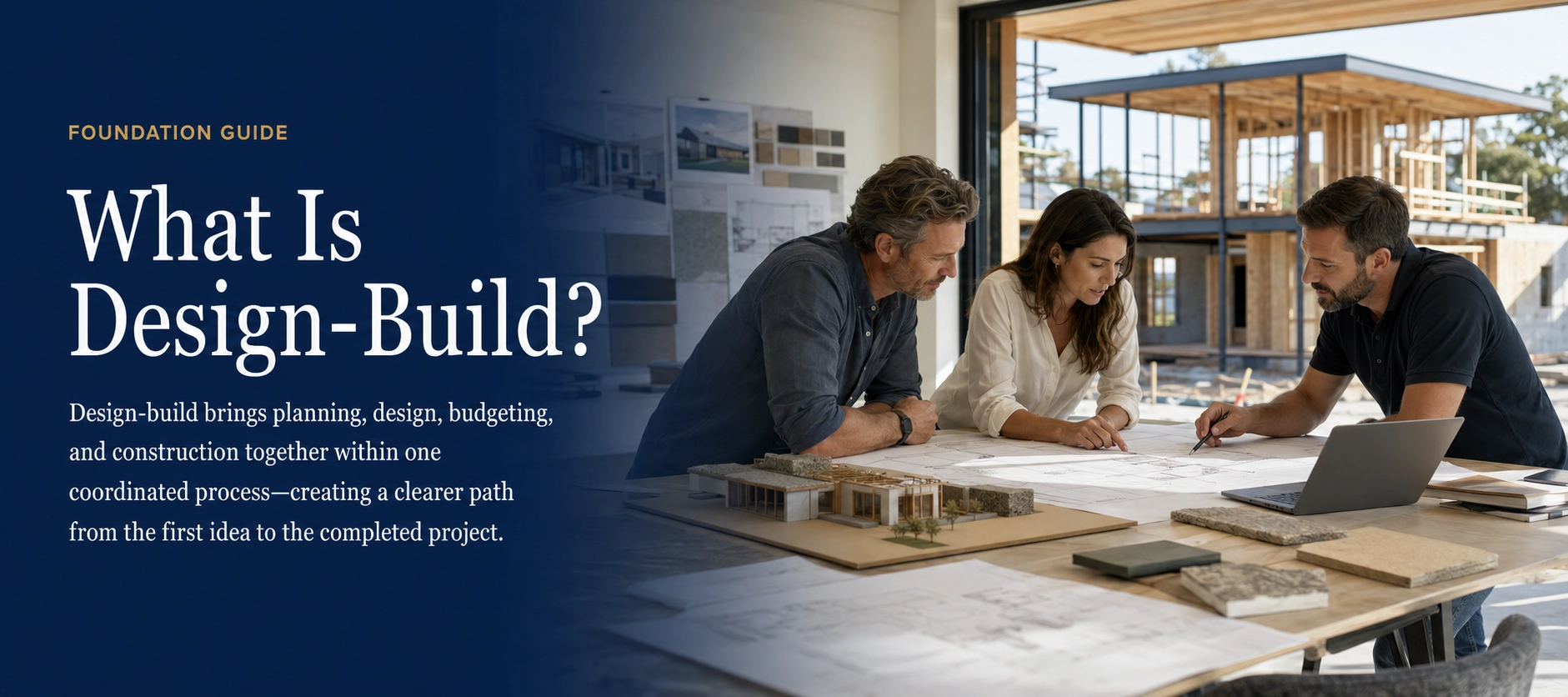
Design-Build brings planning, design, budgeting, and construction into one coordinated process, giving owners a clearer path from the earliest ideas through completed construction.
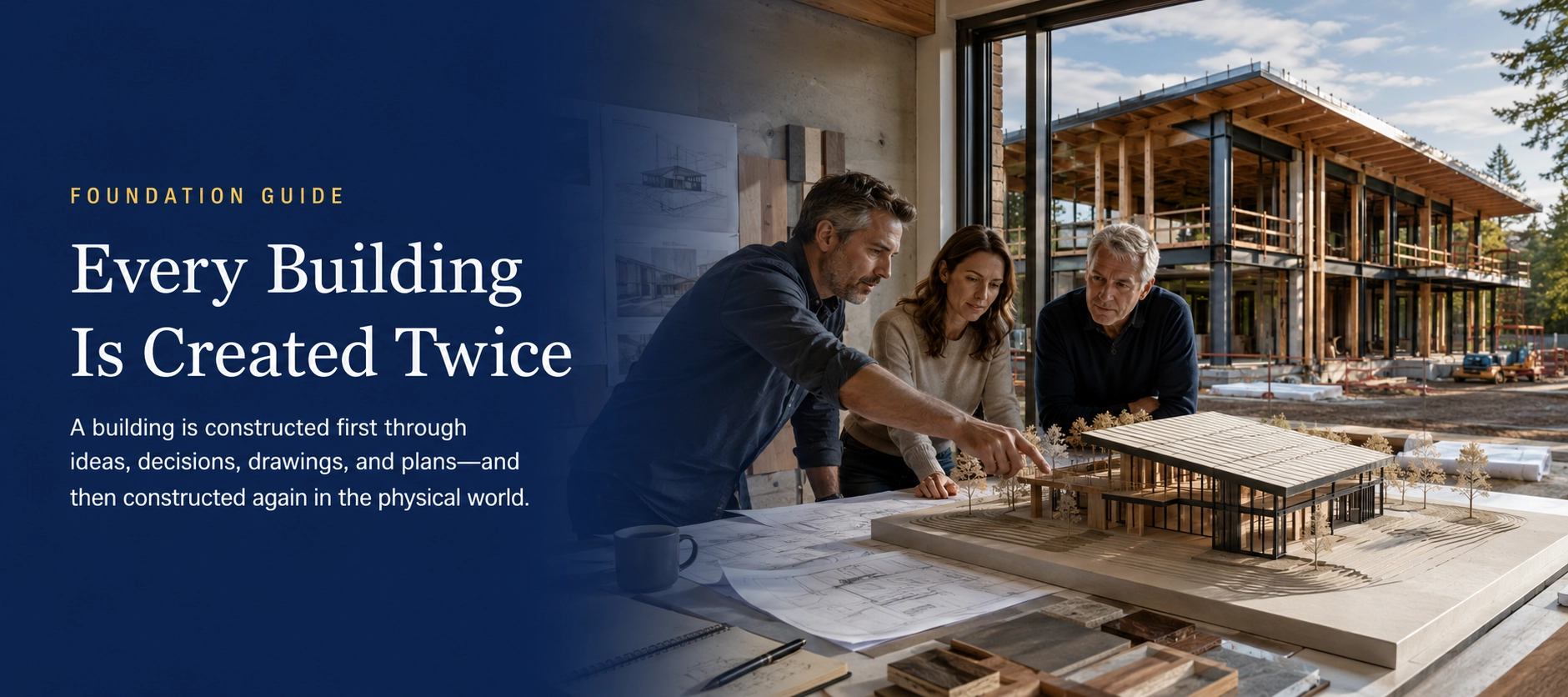
Every project is first created through ideas, decisions, drawings, budgets, and plans—then created again through materials, craftsmanship, and construction in the physical world.
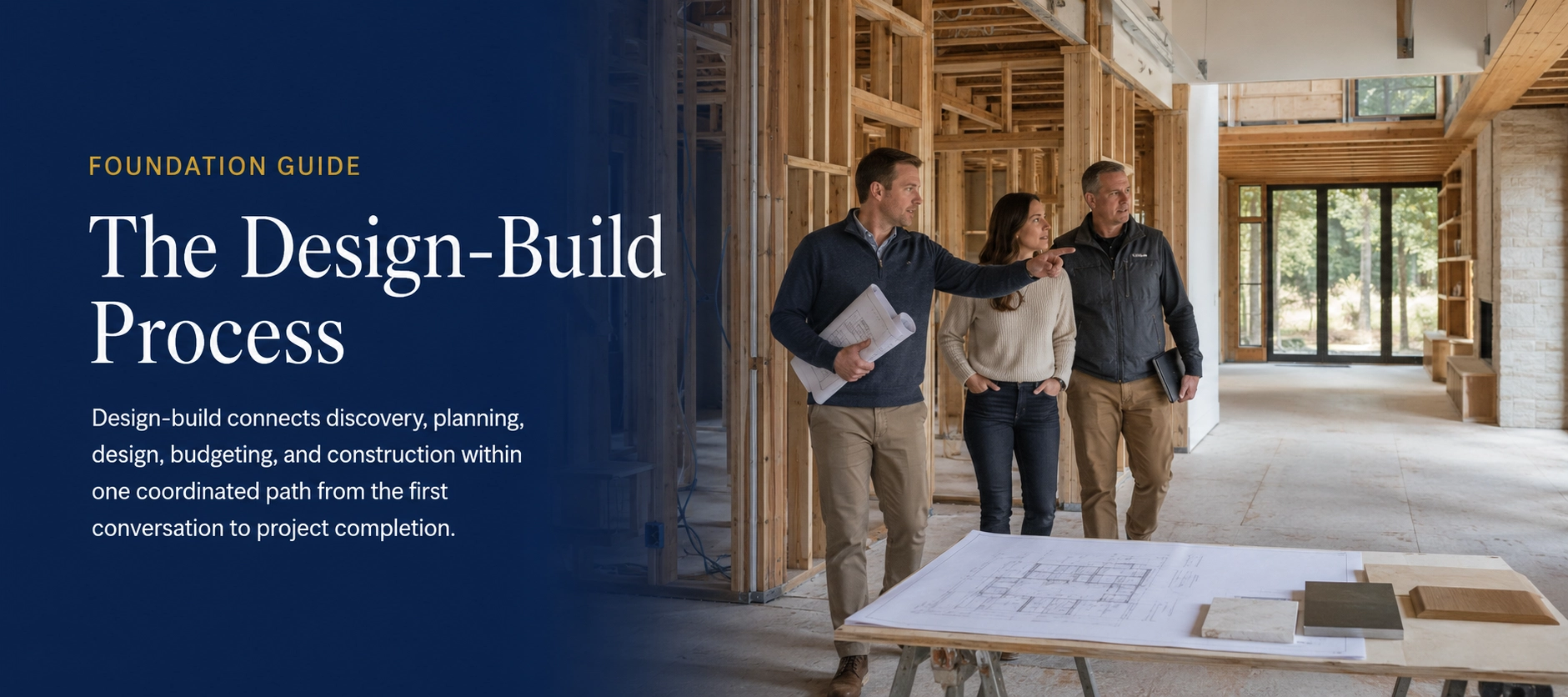
The Design-Build process coordinates discovery, design, budgeting, planning, and construction so that decisions are made in the right order and carried forward with clarity.
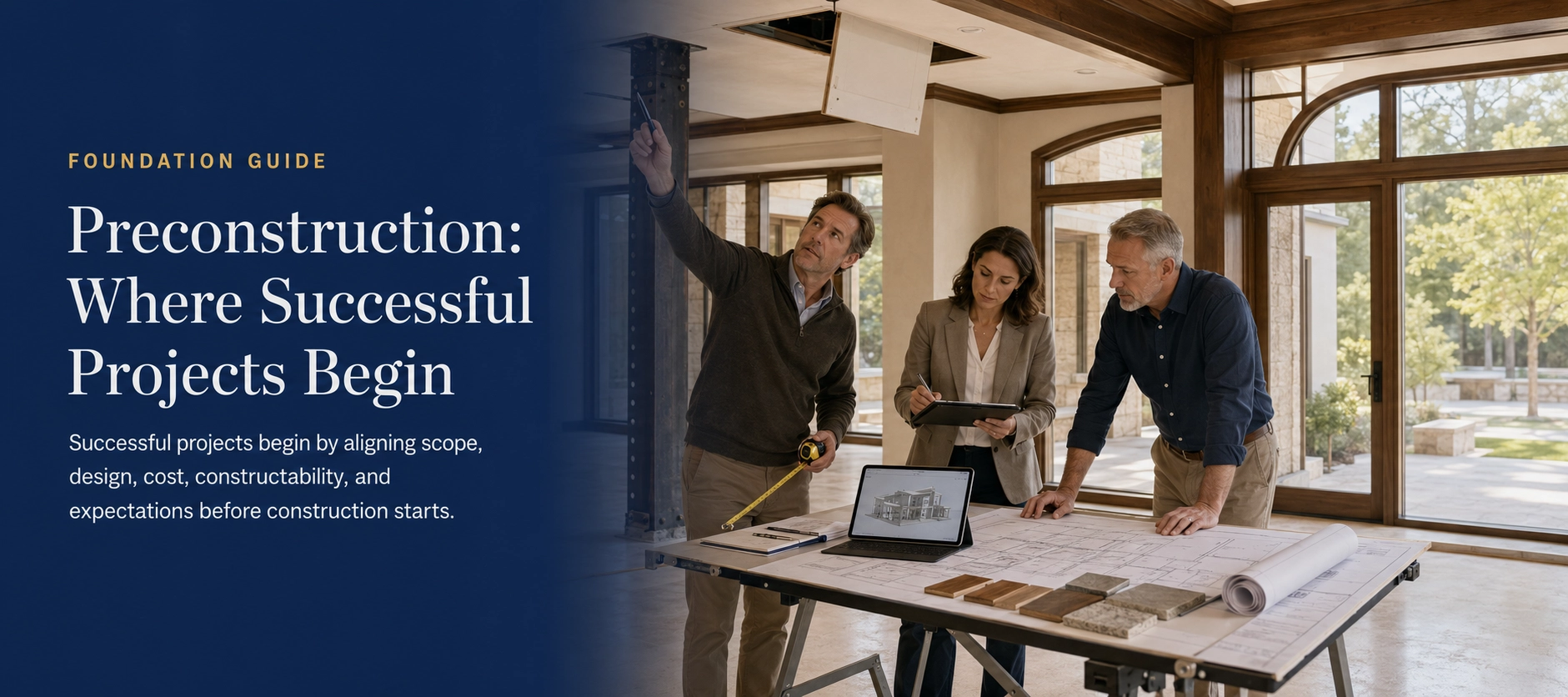
Preconstruction transforms an early vision into a practical plan by aligning scope, design, budget, schedule, and expectations before construction begins.
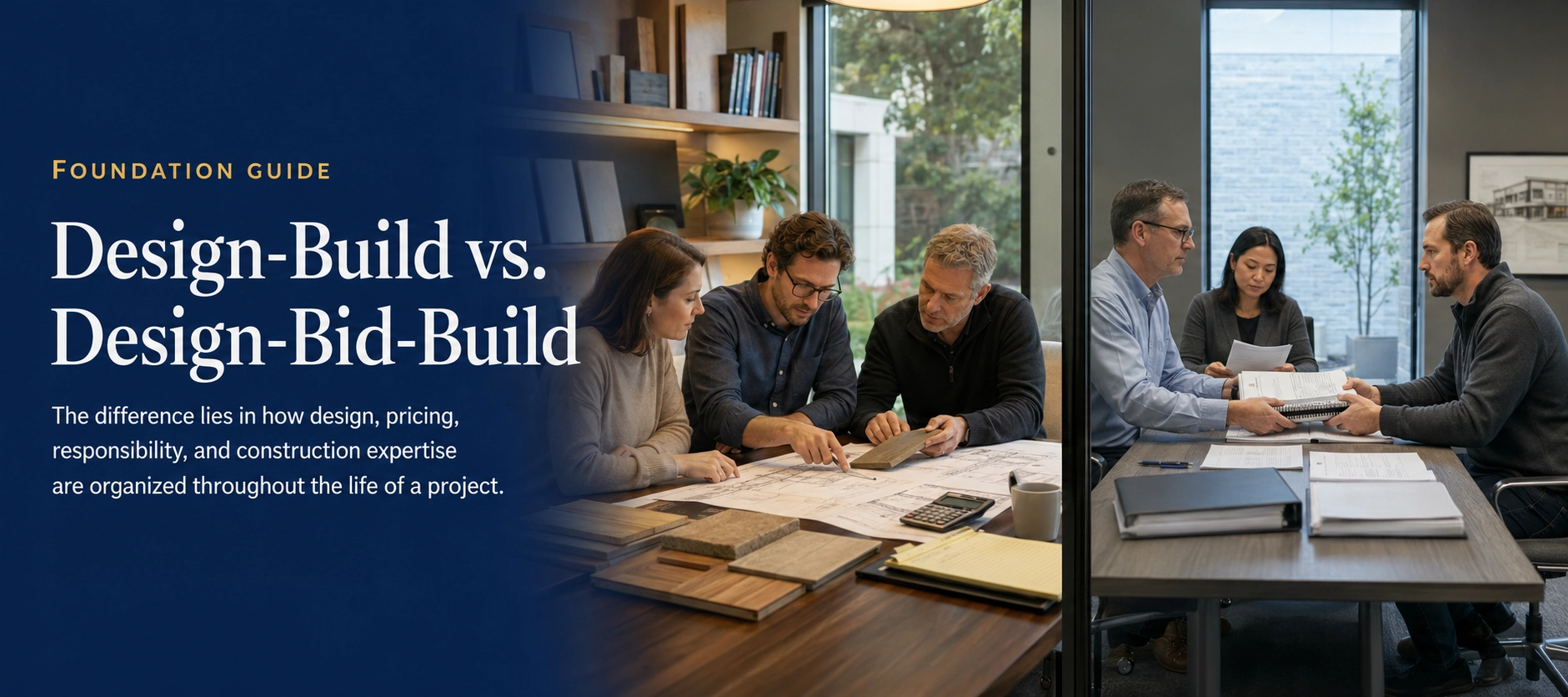
Understanding the differences between these two delivery methods helps owners evaluate how each approach affects communication, responsibility, cost, and project risk.
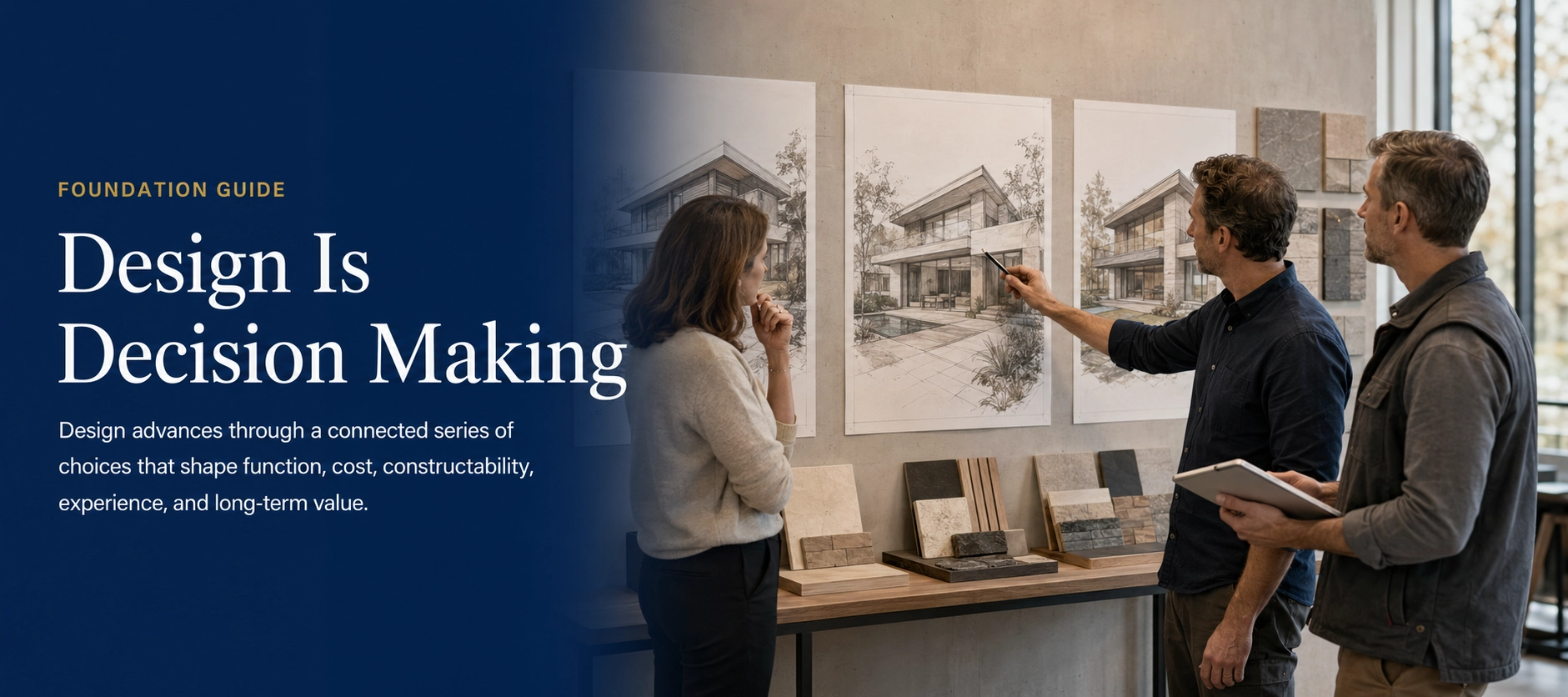
Design is more than appearance; it is the disciplined process of making interconnected decisions about function, materials, cost, constructability, and long-term value.
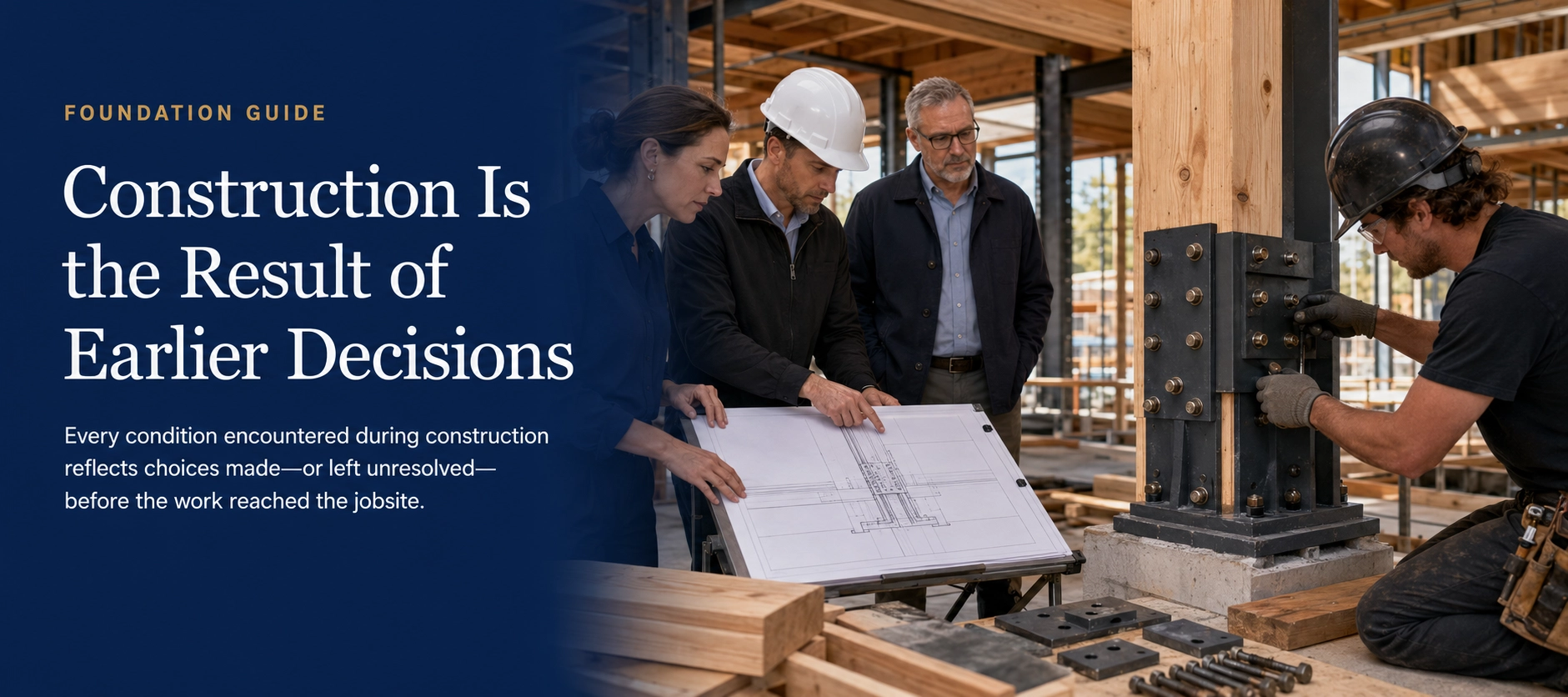
What happens during construction reflects the quality and completeness of the decisions made earlier, when changes are easier and less costly to manage.
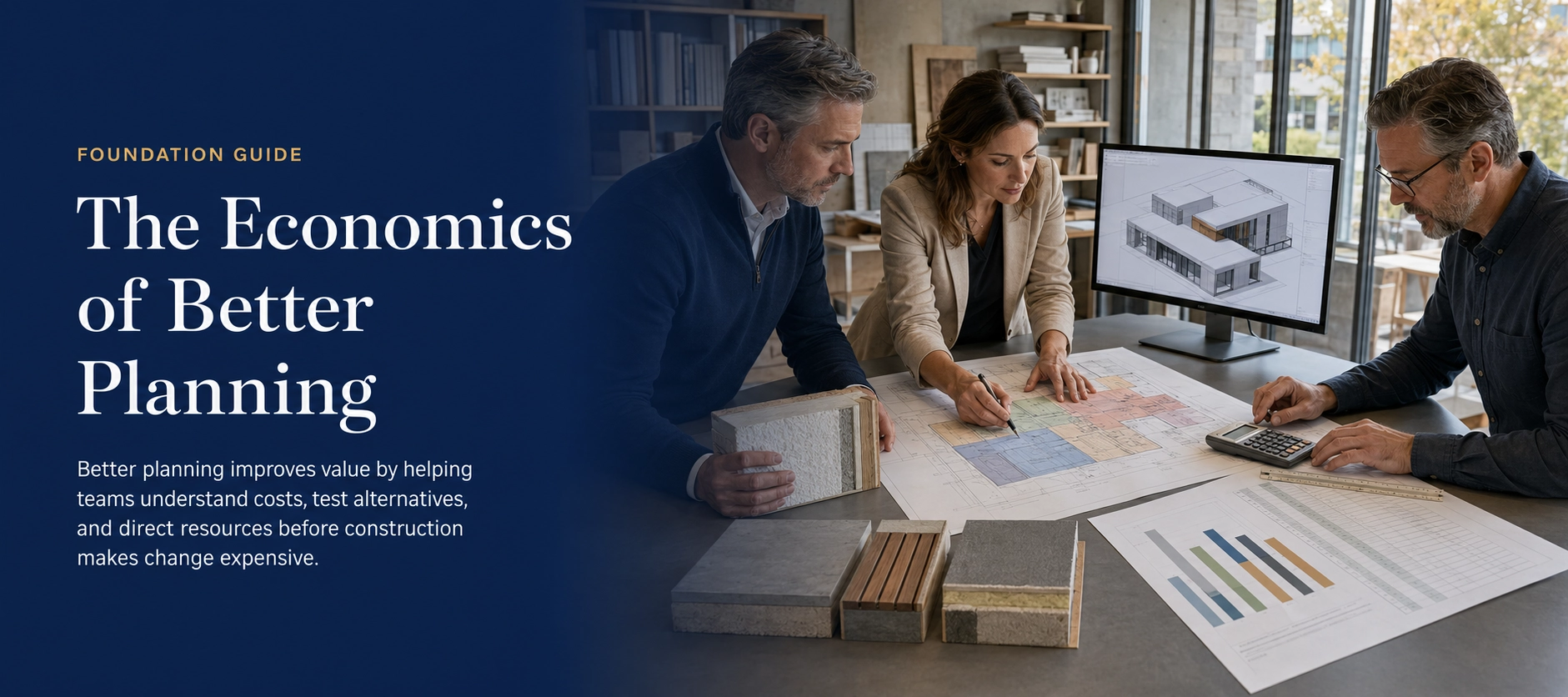
Thoughtful planning protects the project investment by identifying conflicts, clarifying priorities, and reducing the costly uncertainty that can follow work into construction.
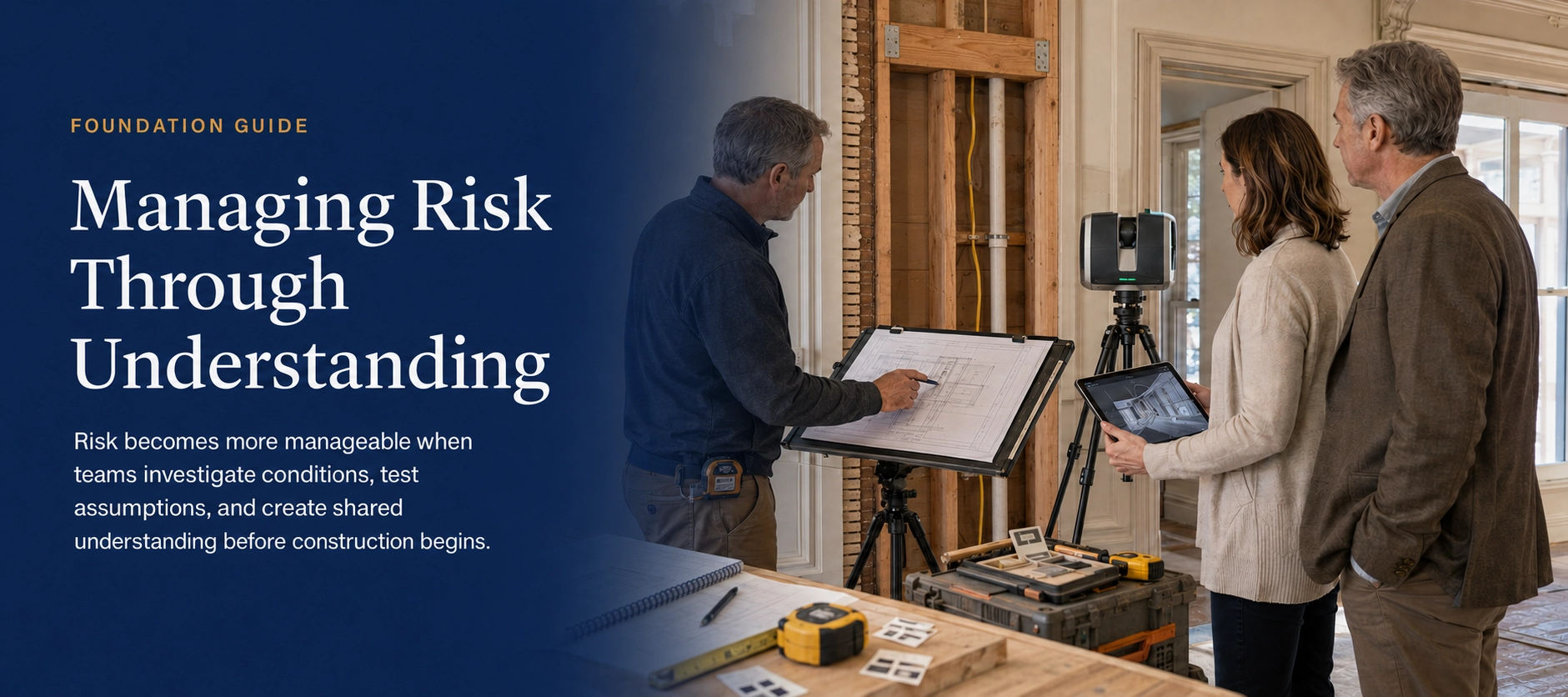
Owners manage risk more effectively when they understand existing conditions, project constraints, financial implications, and the reasoning behind important decisions.
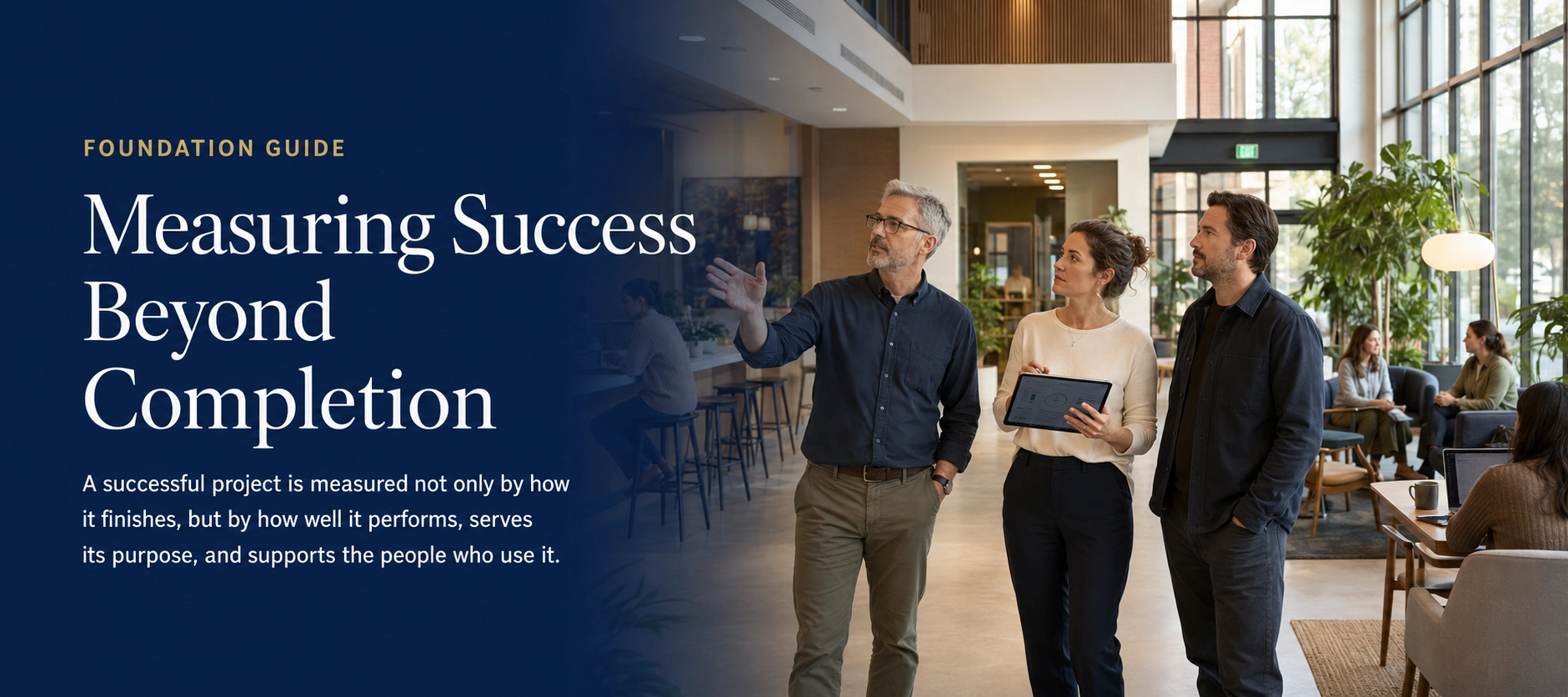
A successful project should do more than reach completion; it should serve its intended purpose, perform reliably, and continue creating value long after construction ends.